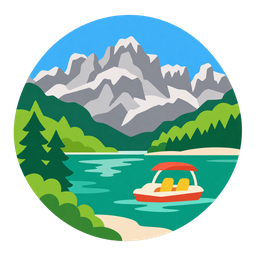
The lake is in the Brenta Dolomites, inside the Adamello Brenta Natural Park area, and the Brenta group is generally counted as part of the UNESCO Dolomites site. We rate that last point as moderate confidence, because we found it in tourism sources and not in the UNESCO listing itself.
How the lake formed
According to Wikipedia, radiocarbon dating by the University of Pisa puts the lake’s formation at about 3,000 years ago. When the lake was drained in 1952, a petrified forest became visible on the lakebed. We found no public viewing point for it, so treat it as history, not a sight.
What you can do here
- Beach and lido: about 12 hectares of beach with a large outdoor pool centre, see Molveno beach.
- Boats and SUP: pedalo, electric boat, kayak and stand-up paddleboard are rented at the lido, see boats and SUP.
- Swimming: a cold alpine lake, 120 m deep at most, see swimming in Lake Molveno.
- Up the mountain: the cable car to the Pradel plateau starts in the village, see the Pradel cable car and hikes.
Two things to know before you go
The lake is cold and deep, so stay near the shore and use the lido. We found no published water temperature, lifeguard hours or entry fee, so we give none. Check at the lido on the day.
Molveno has the Touring Club Italiano Orange Flag, a quality label for inland tourism. It is not a Blue Flag, which is a different, water-quality award. Nearby lakes that do hold a Blue Flag are Levico and Caldonazzo, according to our search of tourism pages.
Where to sleep depends on what you want from the day. We explain that on where to stay in Molveno.
Frequently asked questions
How deep is Lake Molveno?
Up to 120 m according to Wikipedia (checked 8 November 2026).
Does Molveno have a Blue Flag?
No. It holds the Touring Club Italiano Orange Flag, a different label. The Blue Flag lakes nearby are Levico and Caldonazzo.
How old is Lake Molveno?
About 3,000 years, based on radiocarbon dating by the University of Pisa reported on Wikipedia.
Is there a petrified forest?
A petrified forest was seen on the lakebed when the lake was drained in 1952. We found no public viewing point.
Some links are affiliate links: if you book through them we earn a small commission at no extra cost to you. It funds the research behind this site.